
Call us now :08045477720
 Send Inquiry
 Send Inquiry
Autoparts Laser Marking Machine
Price 140000 INR/ Set
MOQ : 1 Set
Autoparts Laser Marking Machine Specification
- Marking Speed
- 7000 mm/s
- Marking Area
- 110mm x 110mm (optional up to 300mm x 300mm)
- Condition
- New
- Laser Type
- Fiber Laser
- CNC
- Yes
- Cooling Mode
- Air Cooling
- Control Software
- EZCAD
- Accuracy
- 0.01 mm
- Power
- 20W / 30W / 50W
- Dimensions
- 800mm x 650mm x 1450mm
- Minimum Line Width
- 0.01 mm
- Laser Wavelength
- 1064 nm
- Repetition Frequency
- 20-100 kHz
- Interface Type
- USB
- Operating Environment
- 0 to 40C, 80% non-condensing
- Operating Voltage
- 220V/110V 10%, 50/60Hz
- Machine Weight
- About 65 kg
- Minimum Character Size
- 0.2 mm
- Application
- Metal & Non-metal Autoparts Marking
- Supported Formats
- PLT, BMP, DXF, JPG, TIF, AI, SVG, etc.
- Focus Method
- Manual/Electric
About Autoparts Laser Marking Machine
Laser Marking Machines employ laser technology to etch orengrave accurate lines that are permanent onto a range of materials. Due totheir adaptability, accuracy, and efficiency, these machines have been widelyused in a variety of sectors. High-powered lasers are used by laser markingmachines to imprint markings, patterns, or codes on materials. Due to itsadaptability to different applications, these machines may be used in a varietyof sectors, including automotive, aerospace, electronics, medical, jewelry, andmore. High-speed operation of these machines ensures effective output andlittle downtime.
Precise and Versatile Marking Solutions
Designed for autoparts manufacturers, this laser marking machine supports high-speed and precise marking on various materials. With a minimum line width of just 0.01 mm and character size down to 0.2 mm, it ensures detailed engravings for traceability, branding, and compliance needs.
User-Friendly Operation and Flexible Formats
The machine operates with widely available voltages (220V/110V) and offers a straightforward USB interface for easy connectivity. It works seamlessly with formats like PLT, BMP, DXF, JPG, TIF, AI, and SVG, making it adaptable for different design requirements.
Durability, Reliability, and Support
Crafted with robust components, this laser marker provides consistent results in operating environments ranging from 0 to 40C with up to 80% humidity. Air cooling reduces maintenance, while the electric/manual focus feature allows flexible adjustments for various tasks.
FAQ's of Autoparts Laser Marking Machine:
Q: How does the Autoparts Laser Marking Machine enhance production efficiency?
A: With a remarkable marking speed of up to 7000 mm/s and CNC capability, the machine accelerates production lines by allowing rapid, repeatable, and contactless marking of components, reducing idle time and manual labor.Q: What materials can this laser marking machine process?
A: It is designed for both metal and non-metal autoparts, accommodating a variety of materials including steel, aluminum, plastics, and coated components, making it suitable for diverse automotive manufacturing requirements.Q: When should I use manual versus electric focusing for marking?
A: Manual focus is ideal for standard, single-batch operations, while the electric focus option is recommended for quicker changeovers or when handling parts with varying sizes, ensuring optimal focus and marking quality.Q: Where can this machine be installed and operated?
A: Suitable for industrial environments, the machine functions effectively within 0 to 40C and up to 80% non-condensing humidity. It requires standard electrical supply (220V/110V), and its compact dimensions enable flexible workshop positioning.Q: What is the marking process using the EZCAD control software?
A: Simply import designs in supported formats (e.g., DXF, AI, SVG) via USB, set your marking parameters in EZCAD, and align the workpiece using the focus method. The software offers intuitive control over marking settings for detailed results.Q: How does air cooling benefit the machine's performance and maintenance?
A: Air cooling efficiently dissipates heat without complex water systems, resulting in lower maintenance needs, reduced risk of downtime, and a more reliable, long-term operation, especially in demanding production environments.Q: What advantages does the 0.01 mm accuracy offer to automotive manufacturers?
A: This high level of accuracy ensures clear, consistent markings even on small or intricate parts, supporting quality assurance, compliance, and anti-counterfeiting measures vital for automotive supply chains.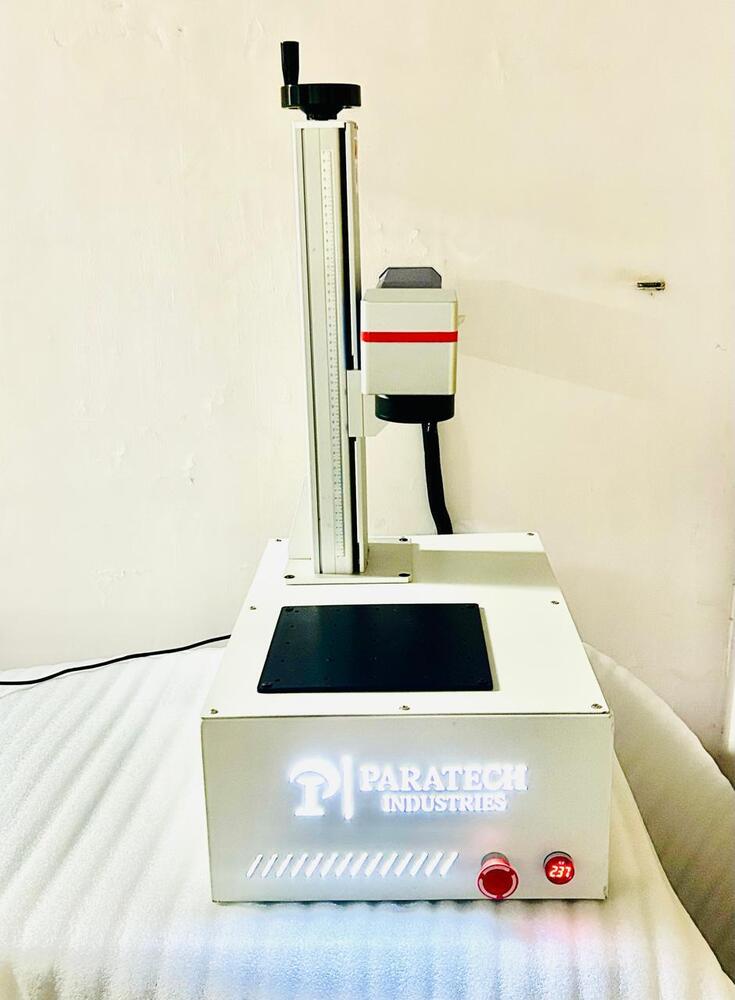
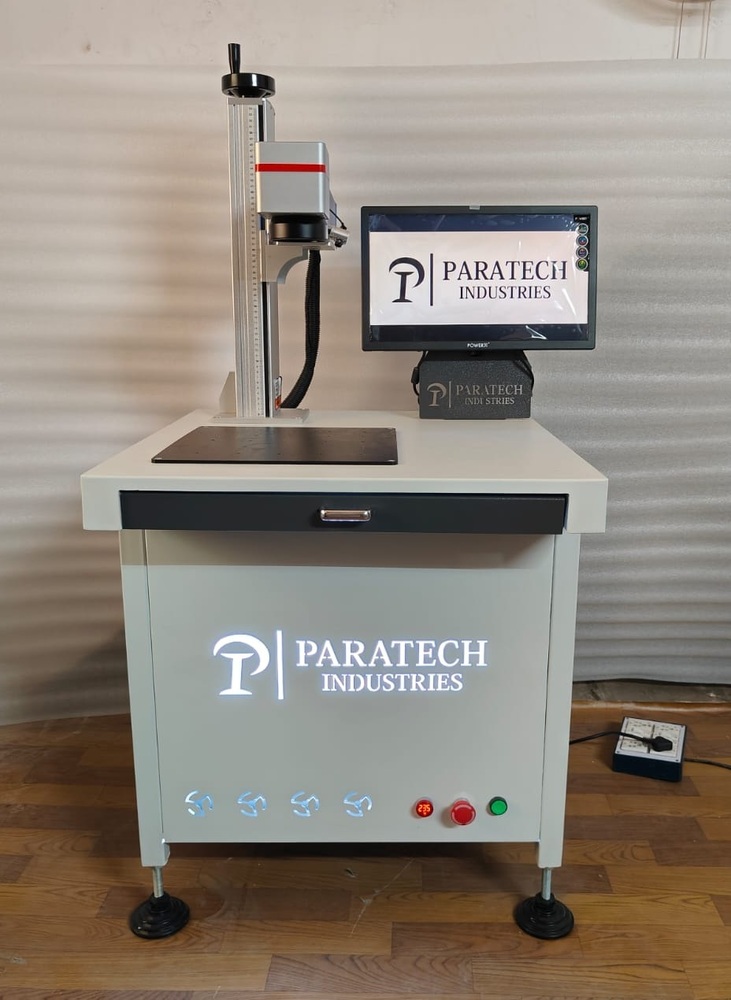
Tell us about your requirement

Price:
Quantity
Select Unit
- 50
- 100
- 200
- 250
- 500
- 1000+
Additional detail
Mobile number
Email

More Products in Hardware Laser Marking Machine Category
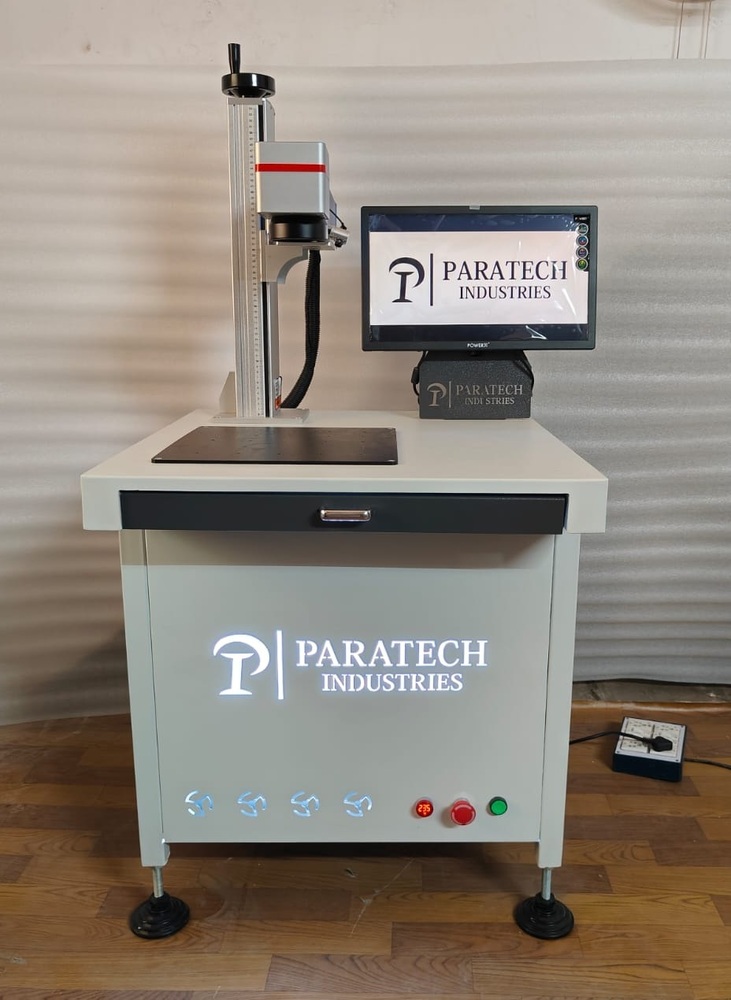
Metal Laser Marking Machine For Industrial
Price 140000 INR / Set
Minimum Order Quantity : 1 Set
Laser Type : Fiber Laser
Condition : New
Marking Area : 110 mm x 110 mm
Power : 20W / 30W / 50W
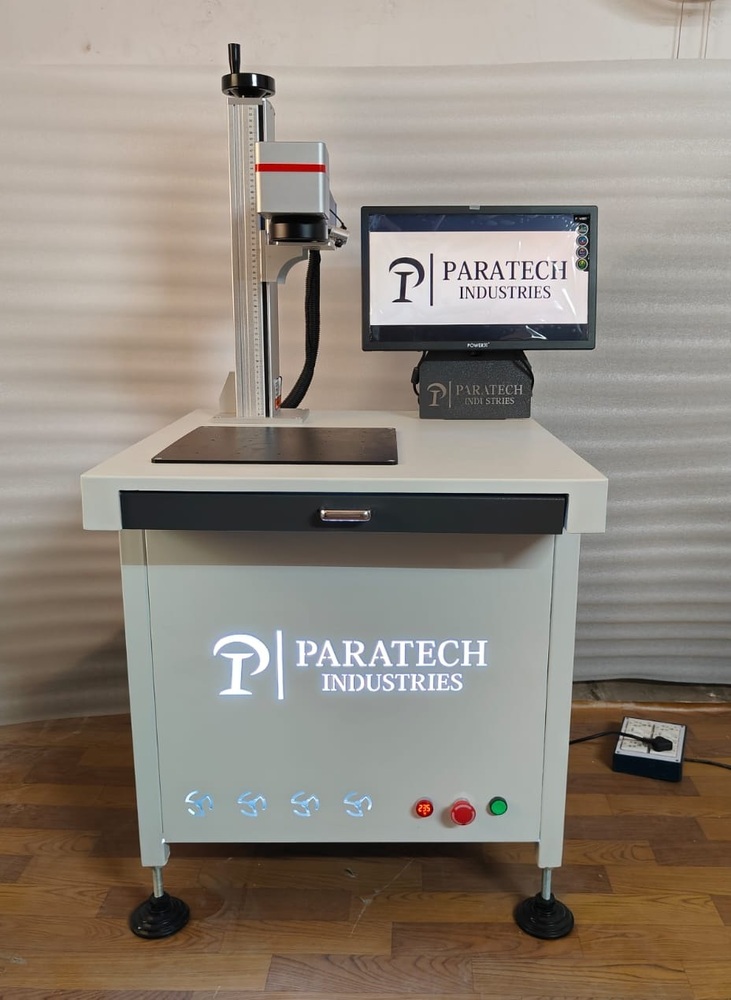
Brass Laser Marking Machine
Minimum Order Quantity : 1 Set
Laser Type : Fiber Laser
Condition : New
Marking Area : 110 x 110 mm (Standard); Optional: 150 x 150 mm / 200 x 200 mm
Power : 20W / 30W / 50W (Optional)
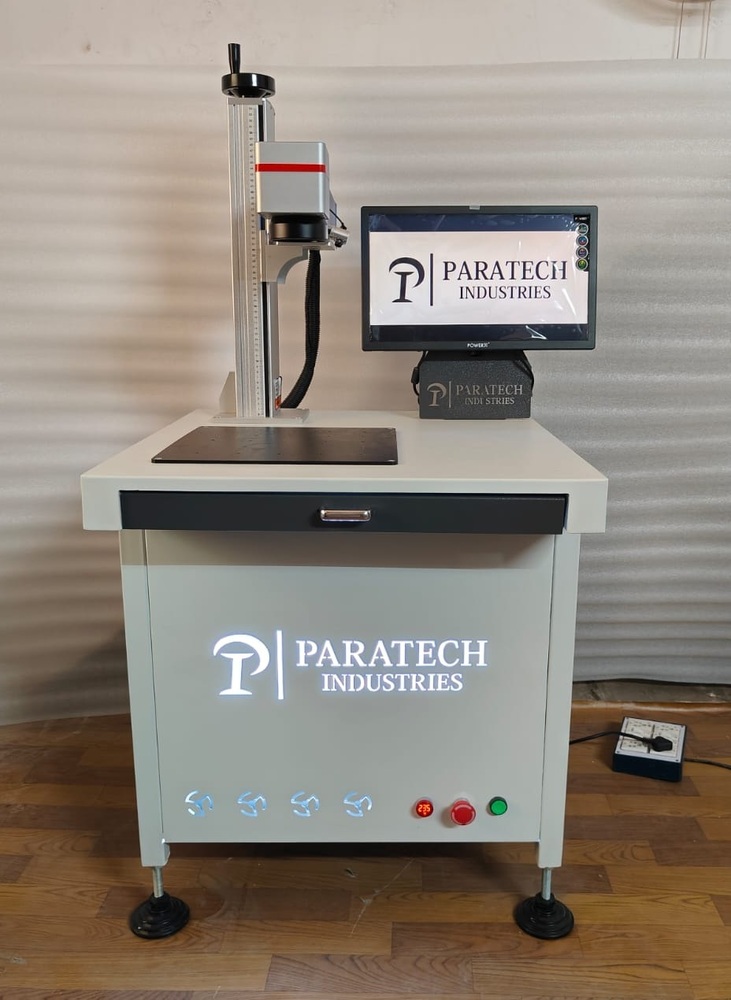
Hardware Laser Marking Machine
Minimum Order Quantity : 1 Set
Laser Type : Fiber Laser
Condition : New
Marking Area : 110 mm x 110 mm (optional: up to 300 mm x 300 mm)
Power : 20W / 30W / 50W
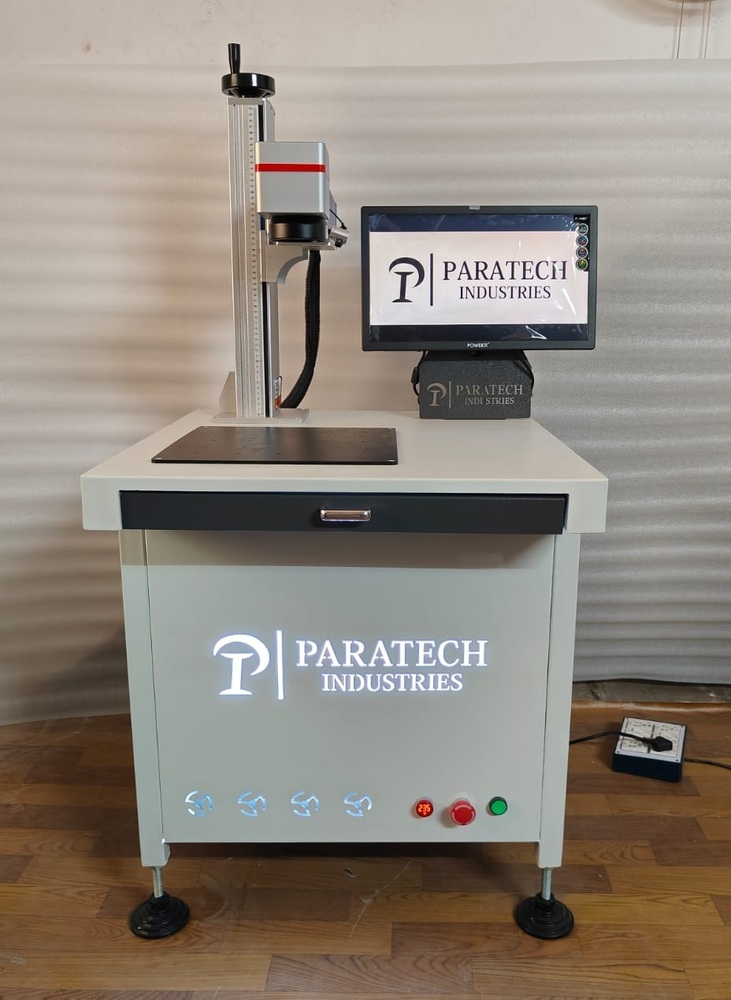
Laser Marking Machine For Heavy Vehicle Parts
Minimum Order Quantity : 1 Set
Laser Type : Fiber Laser
Condition : New
Marking Area : 300 mm x 300 mm
Power : 50W (optional: 20W/30W/100W)

 Send Inquiry
Our Products
- Laser Engraving Machine
- Jewellery Laser Soldering Machine
- Fiber Laser Rotary
- Hot Stamping Machine
- Galvo Head Scanner With Red Beam
- Laser Lense
- Jewellery Laser Welding Machine
- Laser Printing Machine
- Fiber Laser Marking Machine
- Laser Marking Machine
- Utensils Laser Marking Machine
- Hardware Laser Marking Machine
- CO2 LASER MARKING AND ENGRAVING MACHINE
- Laser Cutting Machine
- 3D Laser Engraving Cutting Machine
- GOLD AND SILVER LASER CUTTING MACHINE


Plot No 6, Soma Kanji Ni Wadi, Near Savera Complex, Khatodara Gidc, Surat - 395002, Gujarat, India

Mr GAURAV DESAI
(Proprietor)
Mobile :08045477720
 Send Inquiry
 Call Me Free
Developed and Managed by Infocom Network Private Limited.


 English
 Spanish
 French
 German
 Italian
 Chinese (Simplified)
 Japanese
 Korean
 Arabic
 Portuguese