
Call us now :08045477720
 Send Inquiry
 Send Inquiry
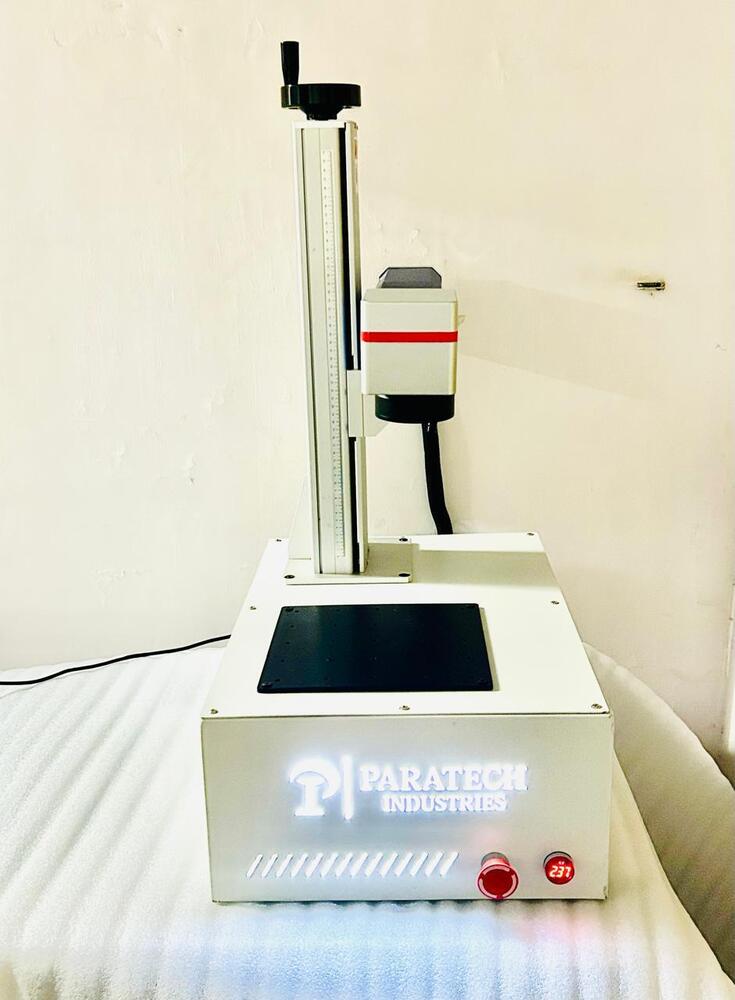
Laser Marking Machine For Brass Application
MOQ : 1 Set
Laser Marking Machine For Brass Application Specification
- Marking Area
- 110 x 110 mm / 200 x 200 mm
- Marking Speed
- 7000 mm/s
- Condition
- New
- Laser Type
- Fiber Laser
- CNC
- Yes
- Cooling Mode
- Air Cooling
- Control Software
- EZCAD Software
- Accuracy
- ±0.01 mm
- Power
- 20W / 30W / 50W
- Dimensions
- 720 x 500 x 1550 mm
- Laser Source Brand
- Raycus / JPT / MAX (optional)
- Repeated Accuracy
- 0.001 mm
- Application Material
- Brass, Metal, Non-Metal
- Minimum Character
- 0.15 mm
- Operating Voltage
- AC 220V / 50Hz / 60Hz
- Usage
- Brass Marking, Serial Number, Logo, Barcode, Designs
- Minimum Line Width
- 0.01 mm
- Wavelength
- 1064 nm
- Focus Method
- Manual / Autofocus (optional)
- Graphic Format Supported
- AI, BMP, DST, DWG, DXF, DXP, LAS, PLT
Laser Marking Machine For Brass Application About
Laser Marking Machines employ laser technology to etch orengrave accurate lines that are permanent onto a range of materials. Due totheir adaptability, accuracy, and efficiency, these machines have been widelyused in a variety of sectors. High-powered lasers are used by laser markingmachines to imprint markings, patterns, or codes on materials. Due to itsadaptability to different applications, these machines may be used in a varietyof sectors, including automotive, aerospace, electronics, medical, jewelry, andmore. High-speed operation of these machines ensures effective output andlittle downtime.
| Marking Speed Capacity | 8000 mm/s |
| Usage/Application | MARKING ON VARIOUS MATERIAL |
| Laser Type | Fiber Laser |
| Marking Depth | AS PER CUSTOMER REQUIREMRNTS |
| Model Name/Number | PI-20 |
| One pass (depends on material) | DEPEND ON MATERIALS |
| Min Line Width | 0.01 MM |
| Minimum Line Width | 0.1 MM |
| Whole Machine Power | 1 KW |
| Maximum working Area | 300X300 MM AREA |
| Power | 20/30/50 |
Advanced Precision for Diverse Marking Needs
Designed for manufacturers, this fiber laser marking machine excels in delivering fine, consistent, and accurate engravings on brass and various metals or non-metals. Its high-speed marking (up to 7000 mm/s) and repeated accuracy of 0.001 mm make it suitable for detailed industrial applications requiring quality and efficiency.
Flexible and User-Friendly Operation
With manual or optional autofocus features and compatibility with a broad range of graphic file formats, this machine is adaptable to distinct marking tasks. Its straightforward interface, powered by EZCAD software, ensures smooth operation even for complex design uploads, making it user-friendly for varied production environments.
Durable and Reliable Performance
Constructed with robust components and a dependable air cooling system, this machine is suitable for both small batch jobs and continuous industrial use. The optional choice of Raycus, JPT, or MAX laser source brands ensures long-lasting performance, backed by exceptional accuracy and low maintenance needs.
FAQ's of Laser Marking Machine For Brass Application:
Q: How does the laser marking process work on brass with this machine?
A: The machine uses a fiber laser at a 1064 nm wavelength to generate a focused beam that precisely marks or engraves brass surfaces. The high precision (0.001 mm) and minimum line width of 0.01 mm allow for fine details, whether you're etching text, barcodes, or logos.Q: What types of marking applications can be performed on brass using this machine?
A: This machine is suitable for marking serial numbers, logos, barcodes, decorative designs, and technical drawings onto brass components. Its fine marking capability also allows for intricate details on various non-metal and metal objects.Q: When is it ideal to use manual focus versus autofocus for marking tasks?
A: Manual focus is suitable when marking on flat, consistent surfaces, while the optional autofocus feature is recommended for objects with varying heights or complex shapes. Autofocus ensures optimal clarity and precision for different workpieces.Q: Where can this machine be installed, and what are its electrical requirements?
A: This laser marking machine is compact and adaptable for use in factories, workshops, or manufacturing plants. It requires an operating voltage of AC 220V with a frequency of 50Hz or 60Hz, making it suitable for standard industrial environments.Q: What are the benefits of using this machine for brass marking compared to traditional methods?
A: Laser marking offers non-contact, high-speed, and precise engraving without damaging the material's surface. This results in permanent, high-contrast marks that are resistant to wear. The process also allows fast changeovers and supports a wide array of design formats.Q: How easy is it to operate and integrate the machine with design software?
A: The machine features user-friendly EZCAD control software, supporting common graphics formats such as AI, DWG, and DXF. This eases the transition from digital artwork to physical marking, streamlining setup and improving workflow efficiency for the operator.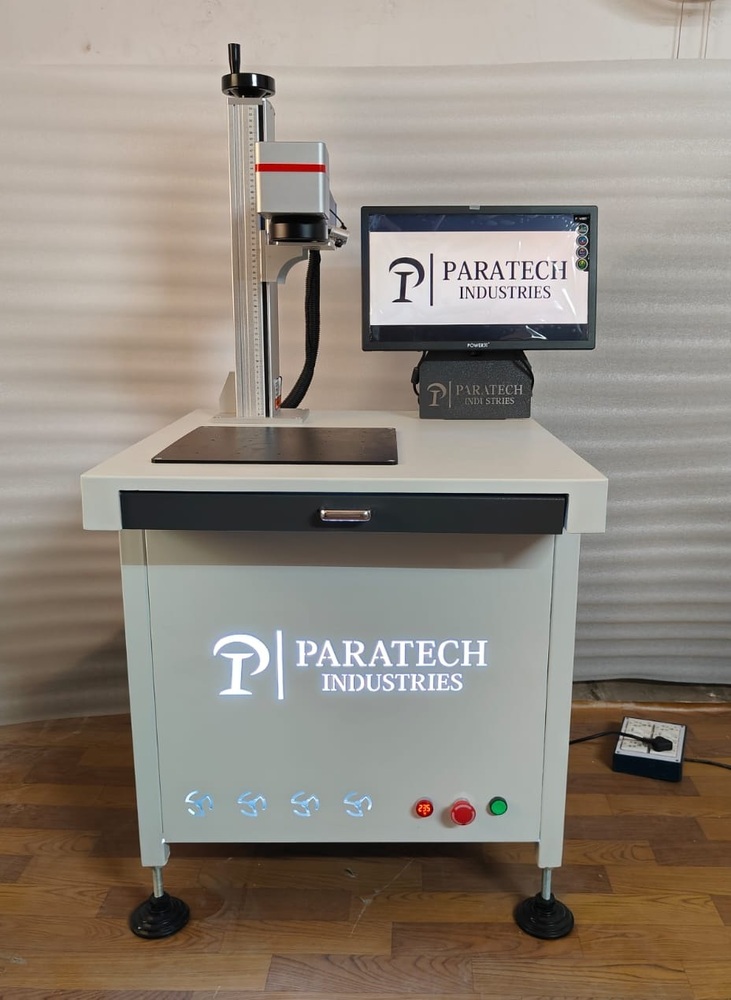
Tell us about your requirement

Price:
Quantity
Select Unit
- 50
- 100
- 200
- 250
- 500
- 1000+
Additional detail
Mobile number
Email

More Products in Fiber Laser Marking Machine Category
Glass Laser Marking Machine
Price 135000 INR / Unit
Minimum Order Quantity : 1 Unit
Condition : New
Laser Type : Fiber Laser
Color : Gray
Warranty : Available
Fiber Laser Metal Label Marking Machine
Minimum Order Quantity : 1 Set
Condition : New
Laser Type : Fiber Laser
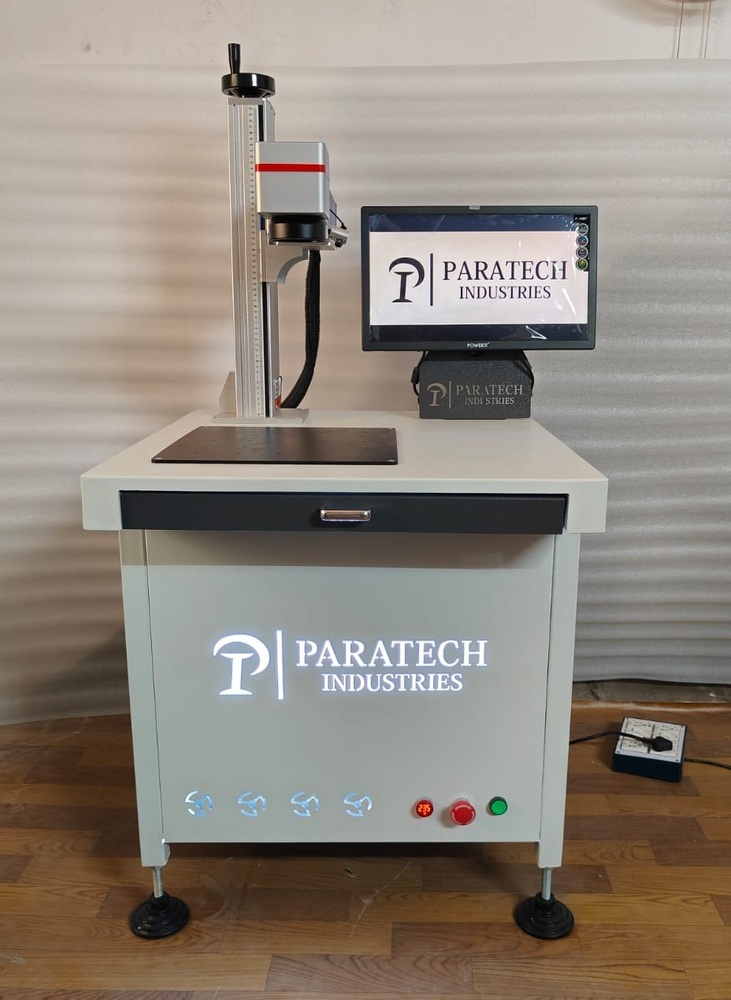
Marking Machine For Image Marking
Minimum Order Quantity : 1 Set
Condition : New
Laser Type : Fiber Laser
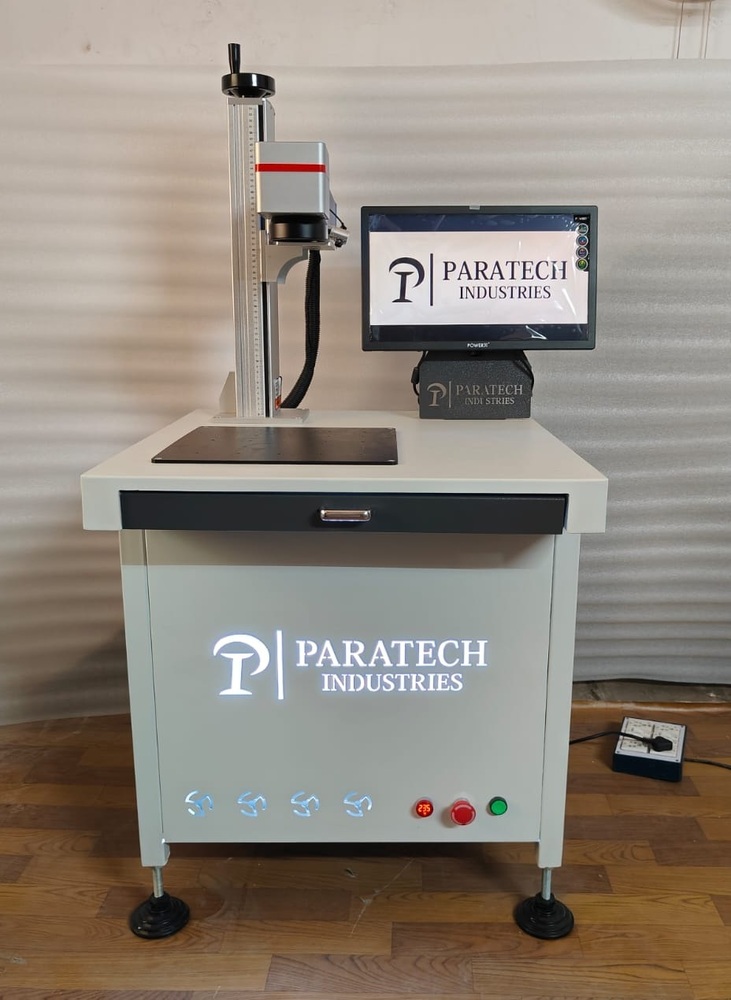
Laser Marking Machine
Price 500000 INR / Set
Minimum Order Quantity : 1 Set
Condition : New
Laser Type : Fiber Laser
Color : White
Warranty : 1 Year

 Send Inquiry
Our Products
- Laser Engraving Machine
- Jewellery Laser Soldering Machine
- Fiber Laser Rotary
- Hot Stamping Machine
- Galvo Head Scanner With Red Beam
- Laser Lense
- Jewellery Laser Welding Machine
- Laser Printing Machine
- Fiber Laser Marking Machine
- Laser Marking Machine
- Utensils Laser Marking Machine
- Hardware Laser Marking Machine
- CO2 LASER MARKING AND ENGRAVING MACHINE
- Laser Cutting Machine
- 3D Laser Engraving Cutting Machine
- GOLD AND SILVER LASER CUTTING MACHINE


Plot No 6, Soma Kanji Ni Wadi, Near Savera Complex, Khatodara Gidc, Surat - 395002, Gujarat, India

Mr GAURAV DESAI
(Proprietor)
Mobile :08045477720
 Send Inquiry
 Call Me Free
Developed and Managed by Infocom Network Private Limited.


 English
 Spanish
 French
 German
 Italian
 Chinese (Simplified)
 Japanese
 Korean
 Arabic
 Portuguese